
How to extend your digital communication with physical media
By Ludwig · 25 March 2026 · updated on 20 October 2026
In short
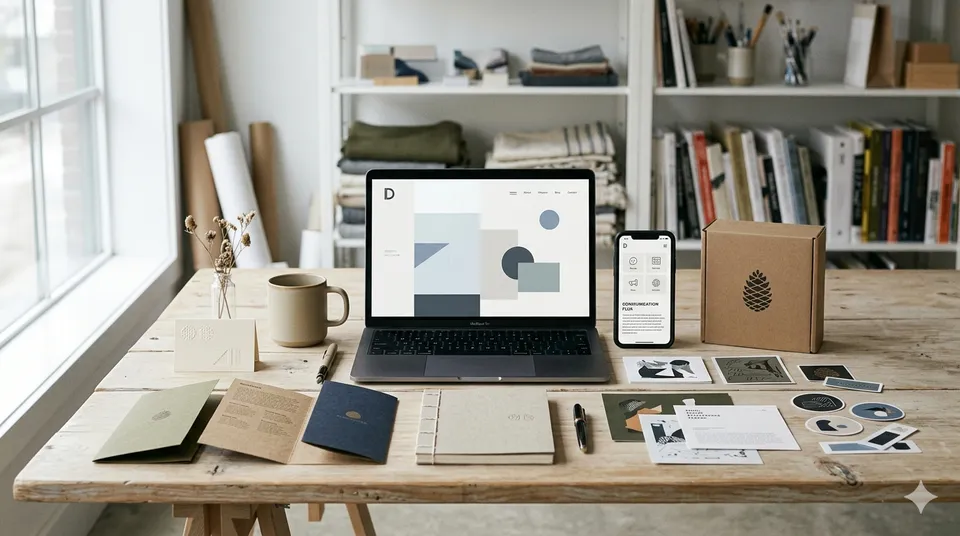
Your digital communication stops where the screen stops. A physical medium that carries content, such as a video box, a card that starts a film or a kiosk in a lobby, takes it all the way into your clients' hands. Placed at the right moment in the customer journey, it turns an ordinary step into a memory people keep… and show.
Does this moment really matter to your client?
A standard document is enough
Does the way you mark it today do it justice?
This moment is waiting for its medium
You already have a key moment that is well served
Two worlds that don't talk to each other
The website on one side, the brochure on the other. Most companies think about these two worlds separately… and leave a gap exactly where it matters most: the moment your client lives through something important, far from any screen.
A signing, a delivery, an opening: emotion peaks, and the communication comes down to a handshake.
“An email gets deleted. An object that tells a story gets kept.”
Objects that speak up
The video box
A small screen built into a box, a book or a folder. When it opens, the film starts by itself. No link to click, no phone to pull out: your client holds an object that speaks to them.
The card that starts what comes next
Lighter still, a printed piece can open a door to digital: a code to scan, a contactless chip, an image that comes alive in augmented reality. The card handed over in person starts a film, a demo or a tour. The paper stays. The screen carries on.
The kiosk, for places that last
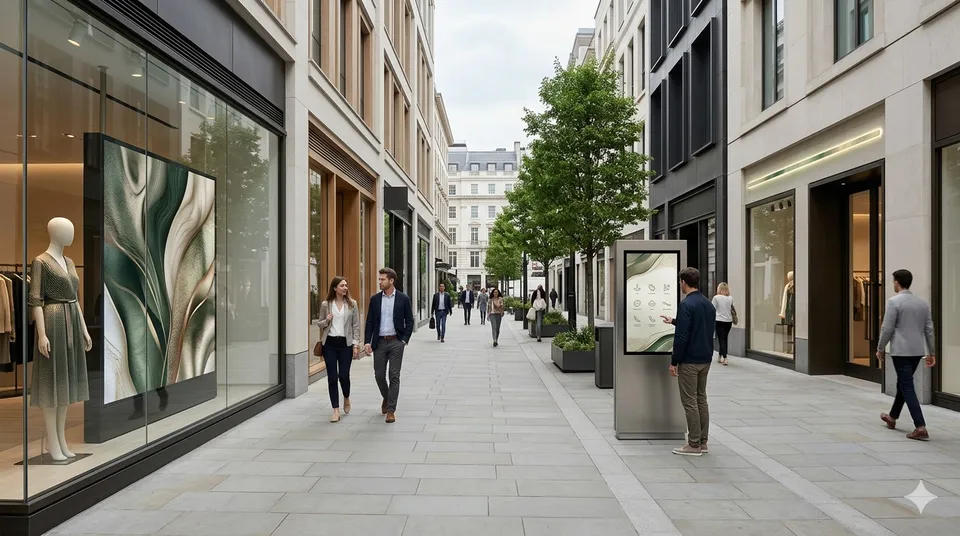
In a lobby or showroom, an interactive kiosk lets visitors explore at their own pace. It answers even when nobody is available.
Why an object in the hand leaves a stronger mark
The memory of lived moments
Your memory files facts on one side and lived moments on the other. Lived moments, charged with emotion and sensation, are the most robust and the easiest to recall. A piece received at a key moment isn't stored as information. It is stored as a memory, with your name in it.
What can be touched gains value
A letter held in the hand is read more carefully than an email. Touch signals that something matters… and what feels precious is remembered as precious.
Why do these objects leave such a mark?
What the brain retains from an experience that links a lived moment with digital content.
A key handover that becomes a memory
Handing over the keys to a new house is the culmination of long months of work. A promise kept. Yet most of the time it comes down to a few signatures and a set of keys on a generic key ring.
We are currently working with a home builder to reinvent this moment. In the box handed to the owners, a screen plays two films: a personal message from the founder, speaking directly to them, then the film of their house being built, room by room. The clients don't receive a file. They receive the story of their home.
Certificate of acceptance of works. Please initial every page.
SignThe most awaited moment of the project feels like an administrative formality.
Welcome home. This is how your house came to life, room by room.
Open the boxThe owners experience the promise kept… and leave with an object they want to show off.
A box is kept, and shown to family and friends who weren't there. Every time it opens, the memory returns, with the builder's name.
Which moment in your customer journey deserves this treatment?
From the inside, it is often hard to see. We look for it with you, in 20 minutes.
Choose the moment before the object
The turning points
An invoice is still an invoice. But every sector has its turning points: signing a mandate with a fiduciary firm, delivering a kitchen for a joinery, commissioning a machine for an industrial company. That is where the medium belongs.
The only question that matters
Before choosing between a box, a card or a kiosk, ask yourself what emotion your client is feeling at that moment, and what would help them feel it more fully. A medium designed around that emotion creates a memory. A medium designed around the technology creates an effect that fades. It is a question of intent, not budget.
Does your customer journey have its key moment?
Think about your clients over the past year and tick what is true:
Your priority: find that moment. Ask two or three clients what they remember about working with you.
Your priority: give it care. Picture what your client would like to receive at that moment, rather than what you have to hand over.
Your priority: longevity. Choose an object your client will want to keep over a document they will file away.
Your priority: consistency. A piece cut off from your identity leaves a memory without a name.
Your customer journey already has its key moments. Now check that each one gets the same care.
Your priority: find that moment. Ask two or three clients what they remember about working with you.
A key moment that deserves better?
Video boxes, connected cards, printed media: objects designed to carry your message all the way into your clients' hands.
Your client will forget most of your emails. They will keep the object that told them their story.